Luang Prabang, Laos

Our next stop was the country of Laos to a little city called Luang Prabang.  If you’re heading there from Bangkok, leave plenty of time to get to the airport and deal with all the flight check in and security (2-3 hours).  The flight is only a few hours and remember to bring cash for the arrival visa ($36).  You’ll also need a photo for the visa which you can either bring with you or they’ll copy one out of your passport for $1.

You’ll immediately notice the difference between Luang Prabang and Bangkok as you drive away from the airport.  Luang Prabang is less busy, less modern, and noticeably more peaceful.  The people are also more friendly, and not in the way that they’re trying to sell you something.  They have more of a quiet politeness that isn’t overbearing, but accommodating at the same time.

Of the three countries, Laos was hands-down my favorite part.  It’s impossible not to feel relaxed in the zen-like ambiance of the town.  It’s a backpacker’s paradise, and while there are tourists there, it’s not overrun with them.  And those tourists that are there tend to be the hippie, mix in with the culture type.  With the 11 PM curfew in the country, there isn’t a huge draw for the spring break party crowd.  Note: The curfew doesn’t mean that you can’t be outside past 11 PM.  It just means that businesses have to closed by then.

Businesses and people in Laos accept Thai baht, but it is a little bit of pain, so try and use whatever baht you have quickly and head to the ATM.  The Laotian money is the kip ($1 = 8,000 kip).  It’ll probably take you a little while to get used doing conversions with thousands at first.

Our hotel was The Le Bel Air Resort.  This is place is really nice; we arrived to a refreshing cold towel and lemongrass tea.  Located a quick 10-15 minute drive from the airport, the Le Bel Air sits on the bank of the Nam Khan River.  The resort itself is made up of several bungalows of varying sizes depending on what you want to pay for, but all the options are very affordable.  And while the bungalows themselves look rustic, they’re actually quite modern.  Each are equipped with A/C, HD TVs, and patios overlooking the river.  The hotel offers free shuttles to the center of town as well as free bikes to borrow.  The service there is also exceptional.  We essentially had our own personal staff member, Mr. Un, who was attentive and helpful.


Getting into town is quick, it’s about a 15 minute walk, but there is one drawback to The Le Bel Air.  In order to get to town, you have to cross a very scary, rickety wooden bridge.  The center of the bridge is for bikes only, and the pedestrians have to walk on the side.  It’s a straight-up Indiana Jones crossing.  I’m not afraid of heights, but this bridge is very unnerving (especially at night).  The planks aren’t very stable and will move when you step on them.  Here’s a little video to show you what the walk is like:

Bamboo bridge
Bamboo bridge

Alternatively, there is a bamboo walking bridge that you can cross, but it costs 500 kip, and is only available during the dry season when the river is low.  So as much as I hate to say this, I would recommend staying at a place closer to town if you don’t like heights.  Again, I hate to say that because The Le Bel Air is such a nice place and the hotel does offer a free shuttle, but that is a bit of pain because the shuttle isn’t run regularly and it has to take a major detour around the river to get to the center of town.  So from a time-saving standpoint just walking to town is a lot quicker and easier, but a lot of people would not be comfortable with that bridge.

My next few posts will cover the sights and sounds of beautiful Luang Prabang, including elephant riding, Kuang Si falls, and rice whiskey tastings.


Bangkok Food Tour, our own Hangover @ Sky Bar, and Chinatown

After getting about an hour of sleep, we somehow miraculously got ourselves up and headed out the door for the Bangkok Food Tour.  If we had known that we’d be out until sunrise the night before, we would never have signed up for it, but since it was already paid for, we just sucked it up and marched on over.  I can’t imagine what the other folks on the tour thought of us at first when we showed up looking obviously like we’d clearly been partying hard just a few short hours earlier.  But we did end up enjoying ourselves quite a bit and despite being aggressively hungover it was real nice having some great conversations and getting to know everyone else on the tour.

However, my review of the Bangkok Food Tour is this: if you’re already typically an adventurous eater, I wouldn’t bother.  This is not a criticism of the tour itself.  Our guide was great, and like I said, it was actually amazing that we were able to get along and have fun with all the other tourists in our condition.  But for my buddy and I who are already always trying exotic foods on the menu, the food at the stops that we made didn’t really live up to what we already do on a regular basis.  But I’ll give you an overview of the tour anyways and you can decide for yourself whether or not it’s worth the 1200 baht.

The tour stops at 5 local spots and here’s the food that each offered:

  • Pig leg at a Chinese restaurant.
  • Rice Noodle in Yellow Curry with Egg, Coconut, Milk, Peanut, and Beef along with a Chicken pastry at a Middle Eastern/SE Asian fusion place.
  • Thai Salad (very spicy), Deep Fried Chicken with Lemongrass, Pork and Mushrooms at a very local, alleyway place.  This was probably the best of the stops in terms of food and getting to go to a real “local” eatery.
  • Green Custard Buns and Thai Iced Tea at a Chinese bakery.
  • Green Curry Chicken w/ Roti and Coconut Sorbet at an Indian/SE Asian fusion restaurant owned by a member of the Thai royal family who has an affinity for Indian food.

This slideshow requires JavaScript.

So like I said, it was a perfectly fine tour, but not worth it if those food options don’t “excite” you.

After that, we napped for a good while and then headed to the Sky Bar at the Lebua Hotel.  If you’ve ever seen the Hangover II (ironically, we went hungover as well), this was the bar featured prominently in that movie and in turn posters of the movie are featured prominently in the hotel’s lobby.  It is easy to see why the movie producers chose this for the film.  Bangkok is known for its multitude of rooftop bars, but I can’t imagine one with a view more spectacular than the one at Sky Bar.  From the bar you can see a solid 270 degrees over Bangkok.  We showed up at sunset and had a perfect view of the sun coming down in the West.  The drink prices are expensive, probably even a little expensive for Western standards, but this is to be expected because the clientele are all wealthier tourists.  But a drink or two is a small price to pay for the relaxing atmosphere, great view, and surprisingly not too packed bar area.  There is a smart casual dress code, so make sure to shower and change before you go.

From Sky Bar we made our way to Chinatown for dinner.  It’s here that you can really find street food central.  The chaos isn’t all that much different from a lot of other Chinatowns around the world, but the difference here is that the sidewalks aren’t for walkers – it’s for all the tables set up for the street food carts.   So essentially the road is full of cars, cabs, Tuk Tuks, and pedestrians (Keep Your Elbows In!).  I can’t honestly say for sure I knew what some of the food was that we saw, but we kept it relatively safe and tried a bunch of different carts featuring food I recognized including:

  • Roast BBQ Pork noodles.
  • Shrimp at this one cart where the cook was putting on a ridiculous fire show with his wok.
  • Pad Thai — the best Pad Thai we had on the trip.  Word of advice: look for the Pad Thai carts that throw a whole fried egg on top of the noodles.


All of this food cost 300 baht per person ($1 = 30 baht).

A couple of other quick places we stopped in on our way back to the Landmark on Soi 11.

  • Oskar Bistro: Typical expat bar with a good amount of porch seating to watch the party scene on the streets of Soi 11.
  • Levels Club:  We came in here to see what the club scene is like and this place is the place to go if you want to dance.  You take an elevator up to the second floor club consists of two floors.  Go-Go dancers perform at the front by the DJ and there are multiple bars making the wait for a drink very short.  There’s also a large outdoor porch area if you want to get away from the loud music for a bit.  Folks keep in mind, there are prostitutes lined up along the edges of the dance floor ready to pounce.

Tuk Tuk – the Auto Rickshaw

A popular mode of transportation in SE Asia is the Tuk Tuk (pronounced “Duk Duk”), which is an auto rickshaw.  Generally cheaper than cabs if you can negotiate correctly, the Tuk Tuk is a fun way to get around.  But know that your heart rate will be accelerated as you ride on them.  Think of it like taking an amusement park ride without the benefit of a safety bar.  And again my mantra for SE Asia — Keep Your Elbows In!

Bangkok: The Grand Palace, Wat Pho, and Wat Arun.

After a much needed night of rest, we set off early for The Grand Palace.  Outside the palace, there isn’t a lot of good English signage to direct you to the entrance, so just follow the ridiculous amount of crowds and you’ll eventually end up at the ticket office.  Be sure to get there early, one, to try and beat the rush a little and two, if you’re in Thailand during their summer months, it will get muggy as all hell.  Another reason to get there early is to be sure you’ll be able to rent a 200 baht audio guide, which was indispensable (when we returned them at noon, they had a sign up saying they were all out).  Keep in mind you’ll need to leave a passport or credit card with them.

The entrance fee to the palace is 500 baht, and when you walk in it’s pure chaos.  Any outdoor signs that say “No Picture”, you can completely disregard because everyone else is.  However, they do crack down on the picture taking inside certain temples, so this post won’t be able to show you some interiors.  Also, there are several places where you can’t wear shoes, so make sure to have socks on if you’re there in the summer because the stone ground does get very hot.  I was also surprised by one thing.  Generally in places with no shoe policies, like the Blue Mosque for instance, the smell is pretty bad.  Somehow, that wasn’t really an issue here and I’m not sure how they got away with that.

What you’ll notice immediately is how much gold there is and how tightly packed all the buildings are next to each other.  It almost feels like you’re in an Epcot Center showcase country, but in this case it’s the real deal.  The highlights:

  • The Temple of the Emerald Buddha with its beautiful illuminated blue Buddha statue atop a golden temple.  The Buddha has 3 robes that are changed each season by the King.  The walls of the room are lavish red, white and gold murals of the life of the Buddha including a Thai version of Michelangelo’s Judgement Day.  The floor is a beautiful Italian marble.
  • Amarin Winitchai Throne Hall inside the Grand Palace displays the impressive gold throne covered by the nine tiered umbrella representing the King.
  • Dusit Maha Prasat Throne Hall gives you a closer look at a different throne and there’s a weapons museum displaying a multitudes of swords, spears and other military relics.
  • Like the British Palace, you can take your photos with a royal guard who maintains his disciplinary pose.


This slideshow requires JavaScript.

After our stop at The Grand Palace, and a quick 50 cent mango snack from a street cart, we walked down to Wat Pho.  We made the mistake of not looking at the map first before leaving the palace,  which made our walk there far longer because we left at the wrong exit.  So check to see which direction to leave from before walking out.  The entrance fee for Wat Pho is 100 baht, but it includes a bottle of water, which was very welcome in the 100 degree heat.  There are no audio guides sadly, but there are a good amount of English information signs throughout.

The main highlight of Wat Pho is the giant, and I mean giant, reclining Buddha.  It’s almost amusing to look at because you’re staring at this huge Buddha who’s laying there like he’s just chilling.  The Buddha even has a little smirk on his face I think.  The scene is far less chaotic, and it’s a bit more civilized in that they give you bags to hold your shoes in instead of having you leave them in a giant pile outside the monastery.  Keep your eye out for pickpockets.  Of all the places we went, I could see how this place is the easiest to fall victim to them because everyone is just staring up and there’s not a whole lot of space.  When you look at the Buddha, pay special attention to the feet with the 108 auspicious symbols of Buddha and you can pay 20 baht to drop coins into 108 bronze bowls in the corridor as a way to bring good fortune, and to help the monks maintain the monastery.


This slideshow requires JavaScript.


From Wat Pho we headed to Wat Arun, but before we did we just happened to stumble upon a great place for lunch (and because we were lost).  Eat Sight Story deck/restaurant is located on the Chaophraya River across the way from Wat Arun.  From there you get a spectacular view of Wat Arun and the parts of Bangkok that you can see up and down the river.  To find it, look for Arun Residences on Soi Ta Tian alley.  The food is decent enough, but it’s priced higher than most places because they know people are going to come for the view.  And the view really is worth it.

From Eat Sight Story, we could see where to take the 3 baht ferry across the river (remember $1 = 30 baht) to Wat Arun.  Sadly, the wat was under renovation so a good portion of it was covered in scaffolding.  The entrance fee here is 50 baht and again there was no audio guide.  Compared to the Palace and Wat Pho, Wat Arun is relatively anti-climatic.  That being said, the pagoda at Wat Arun is one of the more picturesque ones and the surrounding gardens make it a very calming visit after the hysteria at the other sites.

This slideshow requires JavaScript.

Bangkok, Thailand

I’ve been pretty blessed so far to have started 2015 with trips to Australia (I’m still working on those Great Barrier Reef pics, more to come on that) and now — Southeast Asia.  The 12-day trip of the region consisted of Thailand, Laos, and Cambodia.  Starting off in Bangkok, which is essentially the international hub of SE Asia, was the natural choice for the first part of our trek.

The flight over is long and arduous, so if you can afford it, I would highly recommend choosing an airline carrier that is on the higher end.  We flew over, with a stop in Dubai, on Emirates Airlines.  Despite the long travel, that flight was easily the most comfortable flight I’ve ever been on.  I fully admit that it helped that I had an entire row to myself for the 14-hour leg, but on top of that the flight attendants treat you like you are in First Class, the TVs have every imaginable movie (I pretty much watched all the Oscar nominees) and outside the plane camera views. The more bizarre, yet cool part was when they dimmed down the light to let people sleep, the ceiling of the cabin illuminates like a starry night.

I do have one gripe that’s not on the airline. And it’s a tip to you all: Don’t push on the TV monitor buttons so hard.  It’s not your iPad, it’s the back of someone’s seat.

Now that that’s out of the way, we landed in Bangkok in the late afternoon and it was the typical chaos in the Bangkok airport.  Getting a cab was far less of a pain than we anticipated, as they have a cab stand with an organizer directing passengers into cabs.  The cabs should cost around 300-400 baht ($1 = 30 baht) for the 30-minute ride into the city, but our cab told us 500 baht flat rate.  At this point we were too tired to care about arguing and paid the extra $3.  This will be a trend throughout.  SE Asia is ridiculously inexpensive once you get there.  Food, taxis, bars, whatever — it’s all really cheap.

After an interesting cab ride where the driver told us about some good lady-boy bars, we arrived at our hotel, The Landmark Bangkok.  Though the Landmark isn’t anything special, a good solid western hotel (we will eventually stay at cheaper, more native lodging in Laos and Cambodia), what is an advantage of staying there is its close proximity to Soi 11, the popular going out street in Bangkok, and it’s a block away from the Nana train stop.

The trains in Bangkok, by the way, are really modern (just built in 2008), are cheap, and are super easy to use in Bangkok.  This is key because you’ll want to use the trains especially during rush hour.  Cabs at those times will be charging high flat rates because rush hour traffic is so bad that what typically would be a 15-minute drive could turn into an hour or two.  The train will be faster and cheaper.

After we checked in and cleaned up a bit, we went out to explore the area.  The streets are packed with vendors and the hustle and bustle that goes with that.  Right on the first night, I learned the #1 survival tip of Southeast Asia: Keep Your Elbows In!   At all times.  If you don’t, you’re likely to get the hit by a Tuk Tuk, or you might hit some person enjoying their street food on the sidewalk, or any number of things.  Keep them in.  I know doubt will be saying this again in the next few posts; it’s easily the mantra of the trip.

Walking around the streets of Bangkok, I immediately noticed something.  While the noise and energy of the streets was no different than the vibe in say for instance Cairo or Lima, there was an added element of dirtiness to Bangkok.  I don’t mean it physically had more trash.  I mean the sex industry is much more in your face than those other more conservative Third World cities.  There are a ton of “massage parlors” everywhere and lady-boys walking up and down the street.  The vendors on the sidewalk amusingly sell boxes of Viagra and Cialis next to the souvenir trinkets and t-shirts.  It’s a very unique experience walking around that for that for the first time.  But you do get used it.

Since we had no dinner plans, we did what the locals do and grabbed $1 soup noodles from a food cart on the street, which was delicious, and grabbed a 75 cent chicken skewer at a different cart.  We also grabbed a few beers at a dive bar on Soi 11 called The Alchemist (a good place to go if you want a chill vibe and some live music).

The night didn’t last long.  Jet-lag won and we passed out.  More to come on the sights and sounds of Bangkok.

Sydney – Part III

Our third day in Sydney consisted of a bit more of the wildlife that Australia has to offer, so I’ll call it our Wildlife Day in Sydney.  We made our way down to Darling Harbor where you’ll find a wealth of restaurants and museums.  On a nice day, like Circular Quay, it’s a great place to just sit and people watch as most of the eateries offer outside seating/seating that looks out onto the water.  Here’s what the day looked like.

What we did

SEA LIFE Sydney Aquarium

In Darling Harbor there’s a weird cluster of buildings that house the Aquarium, Wildlife Zoo (I’ll touch on this one next), and Madame Tussauds Wax Museum (skipped this because we’ve been to a few in other cities).  Of these three, I think the Aquarium is the only one really worth going to.  At first glance, you don’t think it’s that big.  But as you take the long ramps down there are very sizable tanks that house some amazing fish.  Easily the highlight of the aquarium are the tunnels.  The tunnels run through the tanks and have a glass ceiling that is about a 200 degree arch.  There you can get really up close with some sharks, stingrays, and some friendly and ginormous Dugongs (similar to manatees).  There are several other smaller tanks where you can see jellyfish, giant crabs, and a tank where you can touch various sea life creatures such as starfish.

This slideshow requires JavaScript.

WILD LIFE Sydney Zoo

This zoo is actually adjacent to the Aquarium and I would say is probably not totally worth visiting.  Admittedly, we didn’t time our day right as we wanted to go to the much more famous Taronga Zoo, but it was too late into the afternoon by the time we wanted to get there to make it worth it (it’s a bit of a bus ride outside the city).  So we just settled on the zoo in Darling Harbor.  Now this zoo isn’t horrible, there are actually some pretty good ranger talks that we took advantage of at the kangaroo, crocodile and koala dens.  And the crocodile, named Rex, is a ridiculously large 6 meters and a neat animal to see up close.  My sister also really wanted to cuddle with a koala, but unfortunately in Sydney that’s now illegal or something, so you can only get a picture standing next to it (at a price of course).  Which is one of the main reasons why I’d say to skip the WILD LIFE Sydney Zoo.  The Taronga (even though we didn’t go) I heard is much larger and has more species of animals on display.  Also, if you go to different parts of the country, the laws there are not the same so eventually my sister did get that picture with her actually cuddling the bear.  So save a few bucks on the Sydney zoo and go to Taronga and/or if you’re looking to get a picture with a koala, pay for one where you get to hold the damn thing.

This slideshow requires JavaScript.

Paddy’s Market
Market City
Cnr Hay St & Thomas St
Sydney NSW 2000

If you want to do some good souvenir shopping, Paddy’s Market is the place to go.  It’s really similar to the Cusco Artesian Market in Peru, where you can buy all sorts of trinkets, clothing, food, whatever for yourself or the folks back home.   They don’t really bargain as much at Paddy’s, but the prices are pretty low regardless.  The funny thing about Paddy’s is while the bottom floor is a flea market, if you take the escalators up, on the second floor is a legitimate, modern looking mall.  There you can find retail stores and a food court.

Bondi Beach & Coastal Walk

Bondi beach (pronounced “bond-eye”) is the premiere beach in Sydney that most of the locals and tourists flock to in the hot summer months.  It’s a bus ride away from the center of Sydney and only takes around 20-30 minutes to get there.  Shops and restaurants line the road along the back of the beach and you can grab ice cream, swimwear, sunblock, anything you’ll need for the beach.  Because of the rainy weather though, we didn’t do much suntanning or swimming.  We did however partake in the coastal walk the runs along four of the beaches starting at Bondi.  The trail takes about two hours round trip to walk, and is a great way to see the coast, a few of the other beaches, and get some great shots of the Pacific Ocean.  Hopefully if you go to Australia, you’ll be able to soak in some sun more than us.  Tip: The public bus does go there.  You can take either the 333 or the 380 bus.  Take the 333 – it takes more of an express route and doesn’t make as many stops as the 380.

Where we ate

Sydney Fish Market

Ironically, after the aquarium, we were in the mood for some fish for lunch, so we took a walk to the Sydney Fish Market.  Unless you’re in Sydney for more than just a few days, this really isn’t worth seeing.  It’s a giant warehouse, and it is bustling, but there’s no wow factor or anything.  There’s just a bunch of stores selling fish, and while it’s cool to see so much of it in one place, it’s not anything you’d can’t see in most cities in the US.  We went to a sushi kiosk for food, and while it was good, it wasn’t great.    On a nice day though, I could see how locals, and visitors who are in Sydney for an extended period of time, would enjoy walking down there, buying some fish, and having a seat at the big picnic area along the water.

Spice I am – Surry Hills location
90 Wentworth Ave
Surry Hills Sydney 2010
CASH ONLY

Now this is the solid Lonely Planet place that we thought Din Tai Fung was going to be.  Small, local, with a group of people waiting on the sidewalk to get in, Spice I am has some pretty good Thai food that is relatively affordable for Sydney (though, the $3 for a bowl of rice really pissed me off).  The panang chicken I had was very spicy, but had very good flavor to it.   Because of the size of the place, the restaurant moves fast, so I wouldn’t go there looking for a long leisurely meal.   Full disclosure, I didn’t realize there were a few locations in Sydney until I looked up the URL for this blog.  Looks like their other locations are bigger, so those branches might be a little more casual.

Blackbird Cafe
Balcony Level
Cockle Bay Wharf Harbour Street
Sydney NSW 2000

After walking up and down Darling Harbour, we wanted to grab a bite to eat at a place with a view of the water.  We saw the menu of this place along the sidewalk, and it looked like it had a pretty good, standard selection.  The cafe was on the second floor, so from the ground we couldn’t really see inside.  We walk up and, BOOM, it was like we walked into a club.  It was loud, boisterous and full of 20-somethings enjoying themselves.  My first reaction was, “The food here isn’t gonna be good” as I assumed it was a place more for drinking than eating.  But we sat anyways because the hostess brought us to a table on the balcony with a great view of the water.  Our waitress was super friendly (she told us she was English and had been living in Australia for 3 years), and fast bringing us our food and drinks. I was pleasantly surprised when the food arrived.  The chicken burger I had was really, really good.  The other dishes my family members got were apparently very delicious as well (I didn’t get to sample them).  We chatted a little more with our waitress and she said all the food in Australia is pretty solid.  She said compared to other countries (specifically England), Australians really take good care of themselves and eat a lot of organic foods without a lot of fat or frying oils, and that included random club bars where you wouldn’t expect that.  Still, if you have little kids with you or grandparents, I wouldn’t go to Blackbird.  Otherwise, it’s a good place for a fun atmosphere, good view, and lots of drinks.


 “Australia from Beth”

-Take a day trip to Palm Beach. It’s Sydney’s most northern beach and it is beautiful and has great views by the lighthouse. This is where the Aussie show Home and Away is filmed.

-Roar & Snore at Taronga Zoo is incredible http://taronga.org.au/taronga-zoo/accommodation/roar-snore-more-information.  It is pricey but one of the coolest things I got to do in Australia. You get a private nighttime safari, great food, behind the scenes experiences (feed a giraffe, go into the chimp building), and you get to sleep over at the zoo in a tent/cabin overlooking the entire city skyline. Seriously amazing.

-DO NOT take the Pride of Airlie boat to see the Whitsunday Islands. I might have just had a terrible boat captain but it was the least enjoyable tour I went on. Research tour/boat options, there are tons leaving from Airlie Beach.

-DO NOT fly with Tigerair. They are a budget airline but are extremely strict on baggage weight and other small print items. I ended up having a sort of yard sale at the Melbourne Airport giving away all of my toiletries to reduce my baggage weight and avoid checking my bag for $100. They are notoriously sticklers.

Melonhead at Coogee Beach (pronounced “Could-gee”) has the best smoothies in Sydney and great sandwiches too with reasonable prices.


Sydney – Part II

As I said, our second day was much more productive after a decent night sleep.  We woke up quite early and grabbed a coffee by a nearby cafe (Australians love their coffee) and set off to do a circuit of museums before embarking on one of the highlights of Sydney – the BridgeClimb.  Here’s a breakdown of the activities of this day.  Forewarning, I’m not kidding when I said we did a lot this day, so this blog post will be a tad longer than usual.

What we saw

ANZAC Memorial
Hyde Park, Sydney
Admission is free

This ANZAC Memorial (ANZAC stands for “Australian and New Zealand Army Corps”) was actually supposed to be a quick time killer while we waited for the Barracks Museum (discussed next) to open.  To our surprise, this memorial/museum ended up being one of the most interesting stops in Sydney.  It’s at the south end of Hyde Park, you really can’t miss it, and it’s well worth a visit.  The memorial itself is simple with only a Hall of Memory, Hall of Silence, and Well of Contemplation and the words on the ground simply say “Let silent contemplation be your offering”.  On the exterior, in a place generally where you’d find gargoyles at an old church, there are sculptures of different types of ANZAC soldiers such as doctors, engineers, infantry, sailors, etc.  On the bottom floor of the memorial is actually a free museum.  The museum provides a really interesting view of the life of an ANZAC soldier throughout history (the WWII stories were of particular interest), along with personal stories, letters and other personal effects.

Hyde Park Barracks Museum
Queens Square, Macquarie Street
Sydney, NSW 2000

After the ANZAC Memorial we made our way through Hyde Park, which is a lovely walk on a nice day, to the Barracks Museum.  The price to get in is $10, but if you’re planning on doing two or more of these select museums — Barracks Museum, Museum of Sydney, Justice and Police Museum, or Susannah Place Museum — I’d recommend getting the Sydney Living Museums pass which is $18.  The Barracks Museum gives a really nice history of how Australia started off as essentially a convict’s island and how the community built up from there.  The building itself gives a look at living conditions back in those days and is surprising interactive, allowing visitors to try on different types of clothing, or take a nap in a colonial bed or convict hammock.  The free audio guide is a nice plus as well.  Pretty neat experience.

Museum of Sydney
Cnr Phillip and Bridge Streets
Sydney, NSW 2000

Tell you something; I didn’t love this museum and probably wouldn’t recommend it.  Yes, it gave us a look at some more history of Sydney, but it only really touched upon things here and there (no pun intended).  The historical bits weren’t anymore in-depth than the travel guides we had.  There were two bigger exhibits, one of which was a giant room where kids could play with Legos (admittedly pretty cool, but that did cost extra) and an exhibit on a couple of Australian architects who I never heard of with displays of their work, which if you’re into architecture maybe that’d be cool for you.  There was however a cool theater in the museum which we sat in showing old 1940s documentaries on several things in Sydney, such as the building of the Harbour Bridge and such.  But if you’re only in Sydney for a few days, I’d spend the time you’d spend here on something else.

The Rocks Discovery Museum
Kendall Lane, The Rocks (enter via Argyle Street)
Sydney, NSW 2000
Admission is free

This is another free museum we went through on the way to the BridgeClimb.  The museum is quite small, but it’s free so it’s a nice little place to stop in and see a little history about The Rocks area of Sydney and a learn a little more about the indigenous culture.   One thing that really stood out about their displays was that the artifacts were in glass cases that also acted as touch screens.  It was pretty neat, looked like something out of Star Trek.  Outside the museum, you can find a lot of little shops and cafes that line the cobblestone streets.

BridgeClimb

This was the highlight of the day, and one of the signature activities to do in Sydney.  The BridgeClimb takes you to the top of the Sydney Harbour Bridge for some great views of the city and for bragging rights to say you hiked up to the top of the most iconic structure in Australia (there are a number of celebrities that they have photos of at the top who’ve climbed it).  Now before you get any ideas, the walk up is not dangerous even though it seems like it might.  You’re harnessed in, so you would literally have to unhook your harness, hop over a rail at your elbow, and sidestep like 3 yards to fall off.  So don’t be too afraid to go if you’re someone who is a little afraid of heights.  The guides are all excellent, have a great sense of humor, and provide some really interesting facts about the bridge, city, and Australia in general on the walk up (you’re wearing headphones that are connected to the guide’s headset).  They offer walks at all points in the day, but it does get more expensive if you want to go at sunset and the price will vary depending on which arch you want to take to the top.  They also go up even if it’s raining, they do make you take a breathalyzer, and you can’t bring your own camera, so keep that in mind.  The day we went up it was cloudy and windy unfortunately.  That being said, there was something to the unpleasant climate that kind of added to the “coolness” factor of going to the top of the bridge — it felt more like an adventure.  I would definitely recommend checking it out (give yourself at least 3 hours in your day for it).

Sydney Opera House

So, there’s not a whole lot to say because we didn’t go in.  It’s a really neat building though, and you do kind of have to see it if you’re in Australia.  Unless you pay for a tour inside, or go in for a show, there’s not a lot to do outside the Opera House other than take some pictures and read about it in your guidebook.  Actually a lot of what we learned about the Opera House we got from the BridgeClimb guy.

Where we ate

Buckley’s
East Circular Quay
Suite 18, 7 Macquarie Street
Sydney, NSW 2000

We actually came here randomly because we were looking for a place to eat lunch that was near the Sydney Harbour Bridge before the climb.  It ended up being a great place.  It’s got good views of the harbour with a good amount of outdoor seating (like most of the restaurants along Circular Quay going up to the Sydney Opera House).  They have a good beer selection of their own brews (I had their Little Creatures Pale Ale), and the food is pretty decent.  The fish and chips I had were really tasty and unlike in the US and London, the dish is surprisingly not greasy.  There was also live music playing for entertainment.

Chinatown

Sydney’s Chinatown is certainly a hopping place, and the night we went it was super busy.  It really felt like a going out place for people in Sydney.  There was no shortage of places to get noodles, dumplings, etc.  The place we chose was called Super Bowl Chinese and we chose it because there was a line 15 minutes long, so we figured it had to be good.  And yes, it was good, and cheap in Australian standards (remember everything there is more expensive to begin with).  But it’s not anything better than a good Chinese restaurant in the US, so I would go scouting it out, but if you end up there it’s not bad.  Let me know if you find a really good place in Chinatown if you ever go and I’ll post it.   Also, we stopped by the Australian-Chinese Ex-Services Monument because it had a bit of personal significance for my family.  If you have a couple minutes, it’s on the edge of Chinatown on the way to Darling Harbour and something to check out real quick.


“Australia from Beth”

Sydney Wildlife Day Tours – If you’re looking to explore more in NSW, this is an excellent tour option. The Whale Watching Spectacular tour with John far exceeded my expectations. The day was packed with stops to interesting and unique Australian sites including Royal National Park, Jervis Bay, Fitzroy Falls, Kangaroo Valley, among others. John is extremely knowledgeable and offered plenty of facts along the way. He explained the meaning and significance of each place, which really added a lot of value to the tour. The van was extremely clean and comfortable and there were plenty of snacks and drinks throughout the day. John was very attentive and considerate; he was more than happy to answer questions or offer to take our photo in front of the beautiful places we were visiting. During our whale watching cruise, we saw a large pod of dolphins and two humpback whales, which was an amazing thing to see! Visiting Hyams Beach was definitely one of the highlights of the day, as it is one of the most beautiful beaches in the world.  I would absolutely recommend this tour to anyone visiting Sydney looking to see more of New South Whales. The South Coast is often overlooked by tourists coming to visit Australia, but it is truly a beautiful and unique place. John manages to show many of the highlights in this region while educating and keeping a comfortable pace throughout the day

Australia

Hello all, I’ve returned.  I know there was a bit of a hiatus there; 2014 was full of new things in my life (new condo, weddings, etc.), so I’ve been slacking a little on the posts.  But it’s 2015 now, and I’m back to tell you about my past trip to sunny Australia!

IMG_3641
Sydney Opera House

I don’t know many people who travel who don’t have the land down under on their bucket list, and it certainly was on mine.  My time in Australia was wonderful, and compact – we did A LOT in the few days that we had and we hit up so many different types of landscapes that it almost feels like it was several different trips (city, beach, desert, ocean, rainforest).  So it’s hard to sum up in one word everything we did.

Before I get into each segment of the trip, I’m going to touch upon some overall things about Australia:

IMG_3880
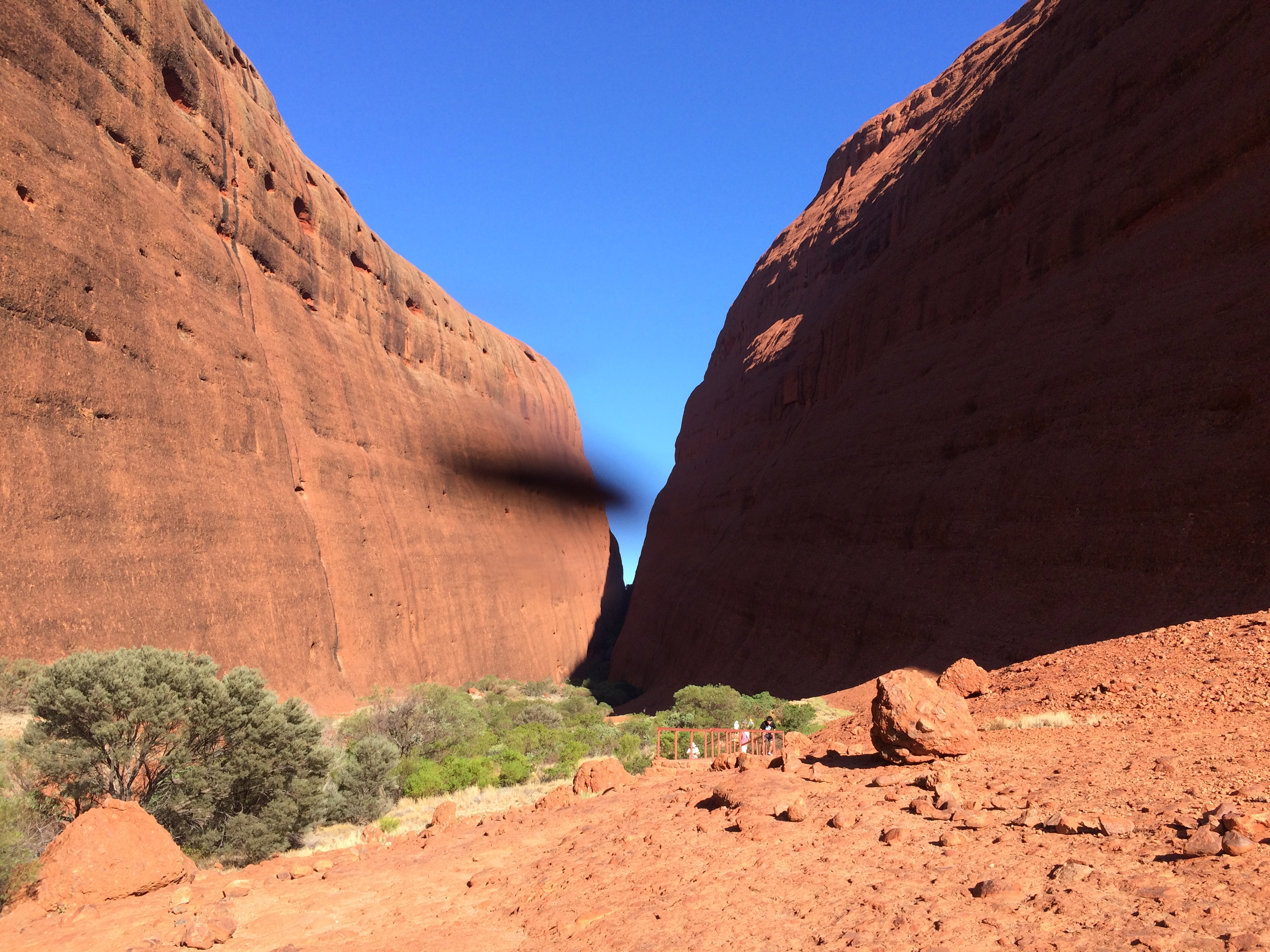
Kata Tjuta

I will say that at every place on the trip there were a few constants about the people in Australia, the first being that I felt like Australians are kind of like the Bostonians of England.  They’re very blue collar, down to earth folks who also don’t pronounce their “R”s (Car is pronounced “cah” for example).  Everyone was also friendly (which is where the Boston metaphor kinda goes away).  Regardless of how cheesy Paul Hogan is in Crocodile Dundee, his demeanor is a spot on representation (at least in the people I encountered).

IMG_3955
Scuba diving and snorkeling at the Great Barrier Reef

I also noticed this about Australia that I’ve never seen anywhere else — there are A LOT of Asians in Sydney.  Now, I don’t mean that I’ve never seen a lot of Asians in a city.  What I haven’t seen really is a Caucasian nation/city with such an integrated Asian society.  Sure, there are a lot of Asian Americans in Los Angeles and San Francisco, but even there it feels like they kind of live in their own world.  In Sydney, I didn’t sense any sort of separation at all – it felt like one really fused culture in one city.  Again, I only really saw this in Sydney, and I’m not sure if Melbourne and the other parts of the country are similar or not because we didn’t make it there.  But at least in Sydney, it was a very apparent blend and a new experience.  I legitimately felt right at home in a weird way.

IMG_4049
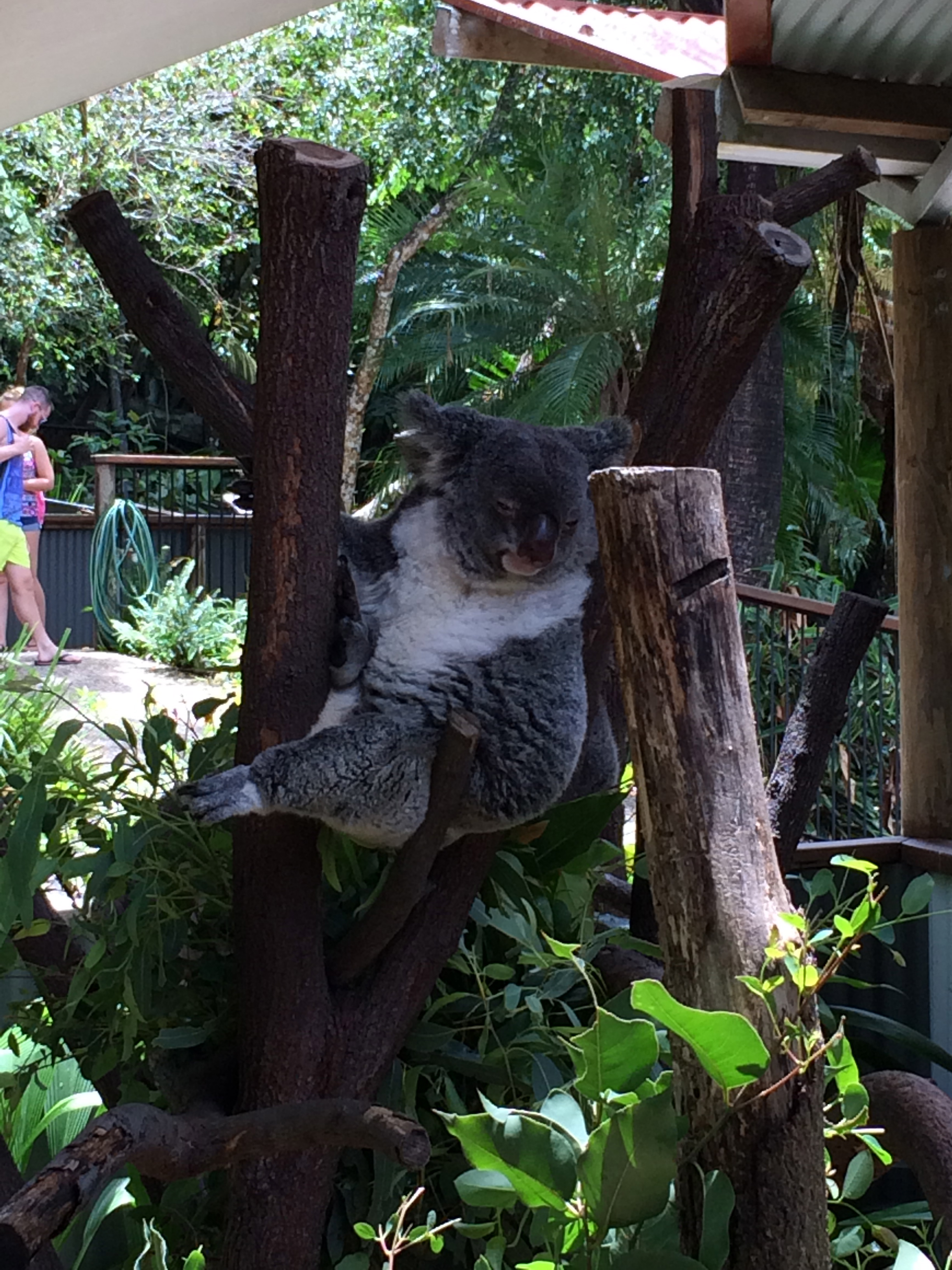
Koalas at Kuranda

Here’s a not so good observation about Australia.  Everything is expensive.  Getting there is expensive and being there is expensive.  This is not a scenario like going to Southeast Asia where you pay an arm and a leg and then everything is cheap once you arrive.  Food, drinks, lodging, tours — everything is pricey.  The Australians get by because they get paid higher on average, but you don’t get the salaries they do, so be prepared to shell out.

Now, the trip to Australia is a long one.  When you’re traveling from the US east coast to Australia, the whole trip will take around 20 hours (About 6 from New York to L.A. and then another 14 from L.A. to Sydney).  Here are a few things that’ll help that length of travel be a bit more comfortable that I learned.

Tip #1:  DO NOT wear dry fit underwear.  My initial thought process was that it would be a long flight, so maybe it’d be more comfortable to wear that Under Armor underwear for the travel.  I was wrong.  Yes it was dry and cool down there, but it was relatively uncomfortable after awhile because the elasticness would ride up constantly when you’re sitting.  So stick with the cotton underwear with Gold Bond.

Tip #2: Bring a small bottle of face wash soap in your carry-on.  I had prepped for the teeth by packing the toothbrush and toothpaste in my carry-on, but didn’t account for my face.  After like the 12th hour of not washing my face, it just felt really greasy and gross and all I wanted to do was rinse off.  I was wary of using the airplane soap because I have sensitive skin and didn’t want to breakout.  If you don’t have that problem, maybe that’ll be okay for you but for the rest of us, don’t forget the face wash.

Tip #3: Don’t go with Qantas Travel to put together your itinerary as your first choice (Qantas Airlines on the other hand was decent).  Now look, if  you do, they weren’t “horrible”.  But they did screw up a couple things, like not giving us a code to a lockbox that had our hotel keys for our stay in Cairns (I’ll get to that later when I talk about Cairns), leaving us out on the sidewalk with our suitcases late at night.  So based on our experience, I’d look at other options if you’re going to book your travel to Australia through a travel company.

I’ll get into Sydney, Uluru/Ayers Rock, and Cairns/Kuranda in my next few posts.  Happy reading and happy new year!


Chicha Arequipa

Chicha Arequipa
Calle Santa Catalina 210 inside 105
Arequipa
Tel: (51) (54) 287360

Gaston Acurio is one of the premier chefs in the world and is credited for helping bring Peruvian cuisine into the modern era.  His famous restaurant is La Mar in the Miraflores section of Lima, where we tried to have a holiday dinner.  Regrettably, that restaurant was closed for the entire week we were there which was definitely a bit of a disappointment considering pretty much everyone and their mother recommended it.

So when we arrived in Arequipa, much to our delight we discovered that one of his other restaurants was open.  It wasn’t the flagship venue, but the folks at our hostel said it was excellent regardless.  This place would easily turn out to be the best meal we had in Peru (in my opinion) – and the worst, in a way, as it ended in a bit of a disaster unfortunately.

We made our way over to ChiCha (it was only a few blocks from our hostel) and we could tell immediately that our dining experience here would be a cut above the norm.  The restaurant’s ambiance has a relaxing courtyard feel, with a smart casual dress code and a friendly staff.

The meals there are pricy, but won’t break the bank.  I’d consider it one of those “let’s have a nice dinner tonight” treat after all the hiking and street cuy you eat.  After the pisco tasting in Cusco, I was more than happy to try a few more pisco drinks on their extensive pisco menu.

The lomo saltado that my sister ordered was the best one I had in Peru, perfectly seasoned, juicy, with just the right amount of char on the outside.   Mom ordered an alpaca curry that was a little more unique, but worked really well with the quinoa side that came with it.  I ordered an amazingly tasty dish as well, the pork stew.  The stew is definitely one of those comfort foods you have when you’re famished – hearty, warm, and even comes with a bib because it is a bit messy.  But it got really messy when I made one of the bigger mistakes of my life.  The stew came with (I looked it up after the fact) a fiery rocotto pepper.  This baby was easily the hottest thing I’ve ever eaten, and not thinking first, I took a giant bite out of it.  My body shutdown.  The burn was intense.  After about 10 minutes of heavy breathing and 4 glasses of water it calmed down a bit, but I legitimately struggled to finish my meal.

Despite the dracarys (Hi Game of Thrones fans) attack on my innards, the stew was actually really, really good.  But as I alluded to earlier, a bit of a disaster struck because of the meal – and I don’t mean the heat from the pepper.  Shortly after dinner, I fell victim to my first case of what we think was food poisoning.  We’re pretty sure it was from the pepper, since it was the only thing that I had eaten that my Mom and Sister didn’t try.  So that rocotto was just the gift that kept on giving for the next few days…

I’ll leave you with this tip: Whenever you travel – be sure to have or have quick access to Pepto Bismol.  It really saved me for the next part of the trip.  


Peru Part III – Machu Picchu

Obviously one of the highlights of any trip to Peru is a visit to Machu Picchu.  No trip would really be complete without it.  For this post I’ll let the pictures do most of the talking.  I will make one point however.  Most people will say that you must, must try and get to Machu Picchu for the sunrise.  I no doubt believe that that is probably an amazing time to see it, and we even got ourselves up before the ass-crack of dawn to try.  However, know that whenever you visit Machu Picchu, the weather is going to be a roll of the dice.  Unfortunately we weren’t so lucky, and the morning of our visit was cloudy and rainy.  Our guide commented on this saying that he loves how all the guidebooks suggest this, but they never tell people that its cloudy like 60-70% of the time.

So go early, if anything to beat the crowds, and if you’re luckier than us you’ll have clear skies.

This slideshow requires JavaScript.