Peru Part II – Inca Trail and Aguas Calientes

No trip to Peru would be complete without seeing the country’s iconic ruins high up in the Andes: Machu Picchu.  There are several ways to go about visiting this legendary place.  For the adventurous backpackers, there are 3 and 4-day hikes on the Inca Trail that finish up at Machu Picchu.  For a less vigorous trip, you can opt for the option we chose:  A one day hike along the last part of the Inca Trail, a night in the small town of Aguas Calientes and a sunrise visit to Machu Picchu the following morning.

Before I get into the “good” of the trip, I want to get the relatively “bad” out of the way.  The tour company we booked our trip through was called Peru Gateway Travel – and I would NOT recommend them.  Now nothing “horrible” happened, but they were very disorganized and did a piss poor job of preparing us for the excursion.  They typically hold pre-trip briefings where a company rep comes to your hotel and goes over what you’ll need to pack, where to be, details, etc.  However, in our case, we were directed to a random address in Cusco to find for ourselves, and relatively late at night.  The thing is: they gave us the wrong address. So my family, while suffering from altitude sickness, was left wandering around a city they don’t know in the dark.  When they got back to the hostel, we had the hotel manager call the company (who gave them an earful) and a representative eventually showed up.  The next problem was that the kid they sent barely spoke English and thought we were going on the 4-day hike.  He was going over all the wrong details, and had no idea what details we needed to hear.  So we ended up bringing way to much of the wrong items for our hike, and all along the way didn’t really have any clue at any given time if we were in the right place or not.

So long story short, like I said, while the hike wasn’t horrible (our guide, Diego, was actually quite good), I’d recommend working with a more organized group.  Now that that’s out of the way, let’s get to the trip itself.

We took the Peru Rail to the 104 KM point of the Inca Trail.  The train ride took about 3 hours from Cusco and was surprisingly comfortable.  We got of the train and our guide Diego* commenced to take us on our hike.  Going back to how bad our prep was, we were seriously over-packed so here’s are a few tips:

-Take only what you know you’ll NEED and not what you might need.  Figure out if water and/or food will be provided in advance.
-If you’re getting a travel company to put this together, they’ll probably provide a bag lunch.  Leave extra room in your backpack for that so that you’re not carrying around a one pound plastic bag full of food  on the Inca Trail.  Trust me, it’s super annoying after about 200 meters.
-If you’re not in the best of shape, or would have trouble walking up to the 15th floor of a building at any given point, I’d suggest having a walking stick.

The hike itself is moderate to very challenging at points, including one steep section the locals call the “Gringo Killer”.  You’ll also want to make sure you’re good and acclimated before you go.  Coca leaves, which Peruvians/Incans have been using for centuries to help with altitude sickness, might help you.  But even if they do, it’ll only provide a small amount of comfort.  Once you get going, take the time to enjoy the beautiful mountain ranges, hundreds of different types of orchids along the path and and the unmatched feeling of breathing in the fresh, clean air of the Andes.  Part of the way on the trail we stopped at Winay Wayna, an ancient Incan ruin built up along the mountainside.  This location provided a great place to sit back, relax and enjoy the view.

The end of our hike concluded at Machu Picchu, but we only did a quick look since it was towards the end of the day and we would be going to be back the next day at sunrise.

For our evening stay, we made our way down to Aguas Calientes, the teeny, tiny town at the bottom of the Machu Picchu mountain.  This town really isn’t worth visiting on its own unless you’ll be at Machu Picchu for two days.  The town is very touristy and is full of hostels, touristy restaurants, an unbelievable amount of massage parlors, and a ton of backpackers.  Despite the touristy-ness, the town is cute and not a bad place to stay for the evening.  Here’s where we stayed and ate:

Hostel Chaska
Alameda los artesanos #209
Urb. Las Orquideas,
Machu Picchu, Peru
974 789818
chaska_machupicchu@hotmail.com

The hostel we were put up in was Hostel Chaska which was a perfectly good, above average hostel.  Clean and no nonsense.

Chaska Restaurant
It was “eh”.  Full of backpacking groups and a basic menu of steaks, chickens, and other normal peruvian fare.

Inka Wasi Restaurant
Another “eh” restaurant.  Clearly you’re not going to have fine dining in Aguas Calienetes.  I did try one of the dishes here that I heard I had to try called Cuy, otherwise known as Guinea Pig.  Again, it was “eh”.  Kind of annoying actually.  I’d say it’s worth trying for the amusement of seeing a whole guinea pig (head and all on your plate), but it’s like eating shitty crabs: it’s a lot of work to get to just a little bit of not that great meat.

Cafe de Paris
Actually a pleasant little place to take a load off and have a latte and croissant.  The owner is actually French and you can tell he’s really into his baking (we asked him about the ingredients) which uses Peruvian spices along with European ingredients.

*Diego has been a Inca Trail guide for over 15 years and has hiked the Inca Trail hundreds of times.  His rate to guide a 4-day hike is $500.  So if you are ever interested, contact me and I will send you his email address.
This slideshow requires JavaScript.

Peru Part I

Happy New Year everyone!  Hope you all had a festive holiday.  I for one had a great vacation with a trip to beautiful Peru.  It was certainly a whirlwind trip consisting of 10 days of hiking, sightseeing, trying new foods and dealing with unique travel issues such as altitude sickness.  And the Peruvian people are amazingly friendly and down to earth.  We’ve got lots to cover so let’s begin.

Our first night was a quick stop in Lima with an early flight the next morning to Cusco.  Getting a cab from the airport is surprisingly simple – the cabs don’t have meters so you can negotiate a charge in advance with basic rates on billboards throughout the terminal.  We’ll go over Lima later on since we spent time in the city at the end of the trip, but I’ll say this one point – our first night did not make a good first impression.  Admittedly, we stayed in an area near the airport because of the early morning flight, so it wasn’t exactly tourist friendly.  But the hostel we stayed in was a little dingy and the surrounding area made me feel like you’re asking to get mugged/raped/kidnapped/take your violent crime pick by taking one step outside.

Regardless, we survived the night and made our way to Cusco, a charming little city high up in the mountains that acts as a starting off point for those who are traveling to Machu Picchu.  You can spend a good few days in Cusco, and you should because the first day in Cusco should be for rest.  The altitude is no joke, and there’s a good chance you’ll experience some form of altitude sickness.  The sickness can range from none at all (for the lucky ones) to puking your guts out all day.  For me, I had a headache, a little dizziness, and my fingers became a little numb.  This discomfort lasted about a day.  So if you’re going to visit, my advice would be to plan a good 24-hours to acclimate.

The weather in Cusco was also pretty hard to predict, in that it could rain at any point (weather.com is pretty useless saying that there’s a 50% chance of rain all the time).  So you have to pack accordingly; keep an umbrella or poncho with you.  Since we had a day in Cusco before our trek out to Machu Picchu, we explored a little bit of the city.  Here’s a rundown of where we stayed and what we saw on Day 1.

Los Aticos Hostel
Calle Quera 253
Cusco, Peru
Phone:+51 84 231710
info@losaticos.com

I would highly recommend staying at the Los Aticos Hostel if you visit Cusco.  The hostel is located very close to the main Plaza de Armas and is within walking distance to most of the sights in the city.  The rooms are clean and have a “cabin” feel.  With the raining coming down it felt like we were camping.  Our room was two floors, with the beds upstairs and a living area/kitchen/bathroom downstairs.  It was a little chilly upstairs, but they provide space heaters which warmed the room up a bit (but you do need to give them some time to heat up).  There is also complimentary breakfast, a laundry machine for guest use, fast WiFi, and they do sell oxygen tanks at the front desk.

Los Toldos
Calle Almagro 171
Cusco 5184, Peru

We stopped by this Peruvian chain for lunch since it was near our hostel and it did not disappoint.  The 1/4 chicken was cooked to perfection – juicy and flavorful, the meat fell right off the bone.  The Washington, D.C. area has several Peruvian chicken joints, and it’s clear that they are trying to mimic what this place does with excellence.  The platter comes with four sauces, which I believe were variations of ketchup, mustard, some green spicy sauce, and a white ranch sauce (maybe?).  The platter also came with crispy french fries and access to the salad bar.  I also took this opportunity to try Inca Kola for the first time, a radioactive looking soda that tastes like cotton candy.  The restaurant is reasonably priced as well.

Choco Museo
Calle Garcilaso 210
Cusco, Peru
Hours: 11:00 AM – 7:00 PM every day

This free museum is actually a branch of the Choco Museo in Lima, but is still well worth the visit.  It’s a great place to relax if you’re trying to get a rest from the altitude.  You get a little tour of the store and there is a fair amount of exhibit reading to be had.  For those that want to partake in a chocolate making class, you can do so for 70 soles (around $25).  If you don’t want to take the two hour class, sample some of their chocolate in the cafe.  Give the Iced Chocolate drink a try.  It. Is. Awesome.

This slideshow requires JavaScript.

Quick Tip: Thanksgiving Travel

My New Orleans post is on its way, I’ve just been a little caught up with work this month.  But I did want to take a moment to talk about something really quick.

Most people have experienced, at one point or another, the holiday travel rush.  It’s just madness, madness, madness on either the roads, airport, bus depot, or train station.  One of the most notorious times has historically been the day before Thanksgiving.  But something’s happened in the past few years that I’ve noticed, and I’d love to find out if anyone else feels the same way.  I took a flight back to Boston right after work on Wednesday night and not only was the airport practically empty, my flight was like half full.

I think that it might almost make sense (and this goes against everything that seems logical) to actually travel on Wednesday night before Thanksgiving.  I think the new trend is for people to leave work early during the day Wednesday or even Tuesday night and travel then, thinking that they’ll beat the rush and instead join the millions of people who also seem to think that they’re smarter than everyone else.   I did ask a few people what their travel experiences were Wednesday night as well, just to see if I wasn’t the only one, and I had one girl drive up to New Jersey with zero traffic and one guy driving up to Philly with no problems.

Call me crazy, but that’s my quick tip of the month.

Coming up in a few weeks – PERU!

Jerusalem – Part II: The Old City

Back to the highlights from Israel.  As I mentioned before, the advantage of staying at the Eldan Hotel is its proximity to the Old City.  Arguably the biggest religious center in the entire world, the highlights of the Old City can be done in a day – but it would be very, very exhausting.  My suggestion would be to give it a day and a half.

***I’ll try and limit the amount of historical background I get into (because quite frankly it would require pages and pages) 

Before you go into the craziness of the Old City, I would actually recommend checking out the Tower of David Museum at the Jaffa Gate.  We visited the museum at the end of our trip through the Old City, but in hindsight doing it beforehand probably would have been more beneficial.  This museum will give you a great history of the city before you go and see the actual sights and can be realistically be done in a couple of hours.

You’ll also notice as you begin your journey into the Old City how remarkably international the environment is.  Jerusalem, and in particular the Old City, really is the most international city that I’ve ever been immersed in with every sort of ethnicity represented.  It just shows you how widespread Christianity, Judaism and Islam are practiced throughout the world.

Christian Section

We started our journey through the Old City at the Jaffa Gate, and made our way into the market to try and find the start of the Via Dolorosa.  For those of you unfamiliar with the Via Dolorosa, it’s the path that Jesus Christ took on his way to his crucifixion.  On the Via Delarosa, there are several checkpoint stations that mark where different miracles/events allegedly occurred during Christ’s walk.  Be prepared to get lost.  Although there are maps and a few signs to attempt to help visitors guide their way through, the Via Dolorosa runs through a very busy and crowded bazaar (much like the one in Fez, but with far fewer shop owners in your face).  While some of the locals will actually try and help you, I’m afraid their kindness gets tainted by the locals who try and take advantage of you and get you in their stores.  What you will find helpful is that there will be tour groups surrounding each of the landmarks, so use that to your advantage.  I really need to find a way to create a perfect map of the Old City, with all the weird little roads and alleys marked.  I’d be a millionaire from the sales off of the tourists.

Expect to see A LOT of religious zealots.  As we were walking up and down the Via Dolorosa, there were several religious groups carrying crosses and chanting.  At the final stop of the Via Dolorosa, the Holy Sepulchre (the site where Christ was allegedly crucified), there were hundreds of worshipers praying and weeping at the locations of the actual execution, where Christ was laid to rest, and his resurrection.  I for one greatly appreciate the historical significance of all these landmarks, but I’ll be the first to admit that I was unsettled by the amount of crying and just 100% pure worship around me.  I did feel in a way like an intruder invading people’s private moments.  And I don’t mean to be insulting, but if I’m going to be honest – I really did think some of the people around me may have been slightly crazy.

Jewish Section

Towards the end of the Via Dolorosa, you’ll approach the Jewish section and the Western Wall (a.k.a. Wailing Wall).  Needless to say, you have to go through tight security to get to the Western Wall courtyard.  My first reaction to seeing the wall was surprise at the size of what was actually left.  I imagined that there was only small portion, but the ruins of the western side of the ancient Jewish temple was much larger than I thought.  There are separate men’s and women’s prayer sections of the wall, so make sure to find a place to regroup after you’re done looking and/or praying (though I heard recently they are considering making the prayer areas mixed).  There is also a dress code: men should have their heads covered and women should be pretty much covered to the knees and over the shoulders.  Shawls and skullcaps are available to borrow.

You’ll notice when you approach the wall that there are thousands, if not millions, or pieces of paper shoved into the cracks of the wall.  These are prayers or letters that have been placed in the wall as messages to God by pilgrims and anyone is welcome to contribute.  Although I don’t practice the Hebrew faith, I still partook in writing a personal note and placing it in one of the cracks in the wall.  God is God, no matter what your faith right?

Muslim Section

Part three of this world religion tour (seriously it was like a straight-up, real-life Epcot Center World Showcase going from religion to religion) was to head to the Muslim section of the city.  Because both Muslims and Hebrews share the Temple Mount, you will literally see a ramp along the Western Wall that will take you to the Dome of the Rock, the site where the prophet Mohammad is said to have ascended to heaven.

There aren’t many signs telling you that the ramp is the way to get to the Dome of the Rock, that’s why I’m telling you now.  Also, there is a long wait – at least 30 minutes – so be prepared for that.  Finally, be sure to figure out what hours the area is open for non-Muslims and plan accordingly.

Once you make it to the top of ramp, you’ll notice how serene the scene is and how impressive the gold dome of the Dome of the Rock stands out.  Compared to the rather crowded Western Wall, there’s much more room to leisurely walk around.  Although non-Muslims aren’t allowed inside, the Dome of the Rock is very impressive on the outside to see and one can imagine how much more impressive the building was centuries ago to the visiting pilgrims.

All in all, seeing this melting pot of religions and nationalities is easily one of the most unique experiences I’ve ever had.  It is hard to put into words how fascinating it was to see thousands of people from these three major world religions crash into this one area no bigger than the size of a small town.  It amazes me to think about how much conflict has occurred over the years over this one region and, quite honestly, how much of a shame it is that there hasn’t ever been a way to find a resolution between what are essentially “distant relative” religions.

This slideshow requires JavaScript.

Masada and the Dead Sea

Driving north from Eliat, we made our way to the kibbutz that we would be staying in for the next couple of days – the Khalia Kibbutz.  The kibbutz is located a few miles from the Dead Sea and going into it I didn’t know what to expect.  I really thought it would be like an amish-type village thing, but quickly realized that I was quite mistaken.  As we approached the gate, there were armed guards who had to check us through due to kibbutzes being a frequent target of terrorist attacks.  We made our way past security, and we saw that that the kibbutz was a modern, fully-functioning community.

More like a vacation resort complex than a farm, the room we stayed in was modest, clean, and affordable with a little kitchen and back patio.  The staff was friendly, but like all Israelis they had a curt, edgy directness.  The Khalia Kibbutz is good choice if you’re looking to do something very Israeli and need a place to stay when visiting the following:

The Dead Sea

The Dead Sea was definitely one of the highlights of the trip.  We went to Mineral Beach, which is one of the beaches you do actually have to pay for to enter.  They also offer towels and lockers to rent and spa services (which are very overpriced).  The beach itself isn’t really a “lay out the towel and lounge” type beach.  The ground is extremely rocky, but there are several beach chairs for you to have so that you’re not sitting on the rocks.

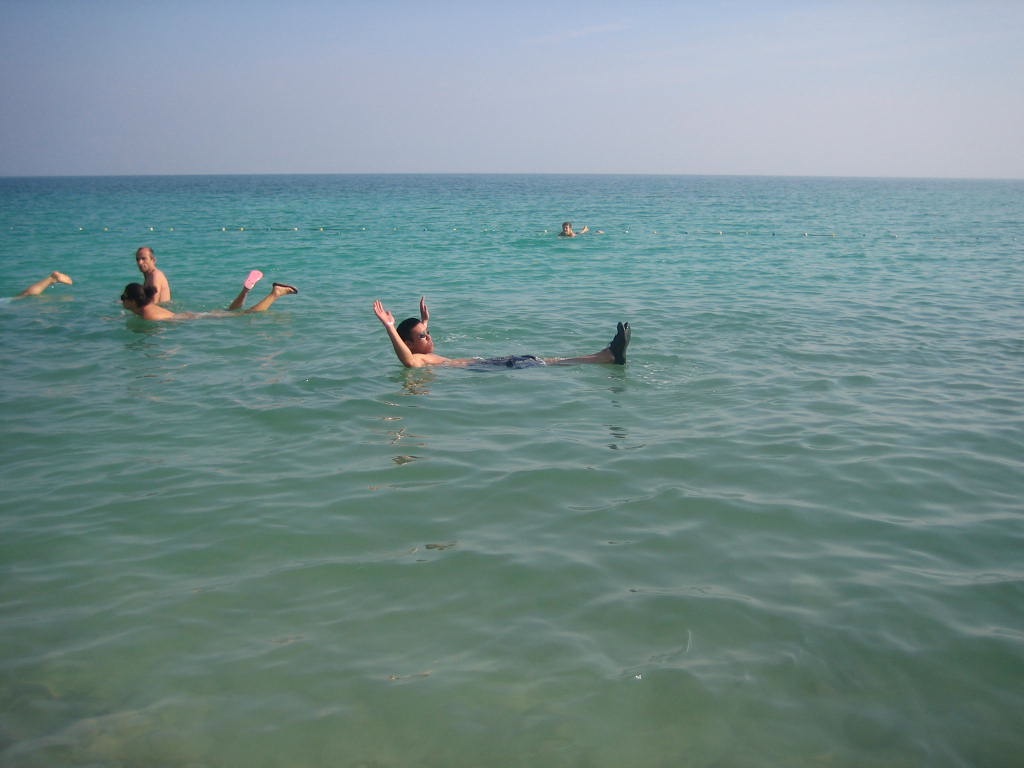
Dead sea
Look Mom! No hands!

Regardless of that, the reason why you’re there isn’t to enjoy the “sand” – its to experience the water.  And it certainly doesn’t disappoint.  All the stories you hear about being able to literally float with no effort are 100% true.  Once you get in, all you need to do is lift up your feet and it’s like you’re on an invisible floating mat.  A few things to note though – DO NOT DUNK.  I cannot stress this enough.  The water tastes absolutely horrible and will cause serious harm to your eyes if it gets in contact with them.  Also, DO NOT SHAVE before going in.  The water is SO salty that any small cut or scrape will burn like crazy.  I didn’t shave, but there were a few small scratches on my legs that I didn’t know about and the water quickly let me know they were there.

Natural mud treatment

When you’re tired of floating in the sea itself, you can try giving yourself a mud treatment.  There are barrels of the mineral mud located on the beach and you’ll see everyone covering their skin up in this gunky mess.  When you wash it off, your skin feels absolutely smooth and fresh as the mud has sucked up all the oils and dead skin and washed them away.  Be warned, the mud also stings so if you’re going to put it on your face, just be prepared.

It’s also worth partaking in the sulfur pool.  This giant hot tub has the same water as the dead sea so you can float around in it with all the other people.  The water is very hot though and we couldn’t stay in there too long.

Hiking up the Masada

Another famous Israeli landmark is the Masada, a fortress that was built on top of a mountain in 37 B.C.  It’s famous for the great siege at Masada, where 960 Jewish settlers committed mass suicide to avoid capture from the Romans.  You can read more about the story here.  There are two ways up the mountain to see the ruins of the fortress – hike and the cable car.  The cable car will get you up to the top in a few minutes.  If you’re going to attempt the hike up to the top of the mountain, you’ll take the snake trail and that climb will take you 45 minutes to an hour or two depending on your pace.  You should also be in relatively good shape, the hike up is not an easy one if you choose the snake trail.  There is a significantly easier trail up as well called the Roman Ramp, but that requires you to drive 40 minutes around the mountain to the other side.  There’s a fee to hike and a fee for the cable car.  A popular option is to pay for the hike up and a pay for a one-way trip back down on the cable car.  Once you get to the top, you can easily spend a couple hours up there.  There are several pretty intact ruins left and the views of the Dead Sea are amazing.

Ein Gedi and Qumran

For more hiking, swing by Ein Gedi Nature Park.  There you can explore the park’s waterfalls, caves, natural springs and wildlife.  It’s pretty incredible seeing the lush flora and water of this oasis in the middle of the desert.  Qumran is also located close by.  If you have an hour, check out the site where they found the Dead Sea Scrolls and see how the ancient tribes that found them lived.  However, keep in mind that the actual scrolls aren’t kept at Qumran.  They’re housed in the Israel Museum in Jerusalem – our next destination.

This slideshow requires JavaScript.

A couple of Boston’s best pizza offerings from the Boston Guide

Taking a quick break from the Israel postings for a bit here, you may recall that I’m always looking for write-ups from readers such as yourself.  This blog is meant to be as comprehensive as possible and I love it when you folks are as enthusiastic as I am about traveling!

With that, one of my best friends was kind enough to share his thoughts on what are arguably the two best pizza joints in Boston.  You can call him the “Boston Guide”.  Having lived in Boston all his life, he certainly knows what he’s talking about (especially when it comes to food) and I fully support his reviews having been a patron at both pizza places myself as well.  Buon Appetito and thank you again “Boston Guide”!

Regina Pizzeria
11 1/2 Thacher Street
Boston, MA 02113

Hours of operation:

Sun-Thu
11:00am -11:30pm
Fri & Sat
11:00am -12:30am

Regina Pizza, North End


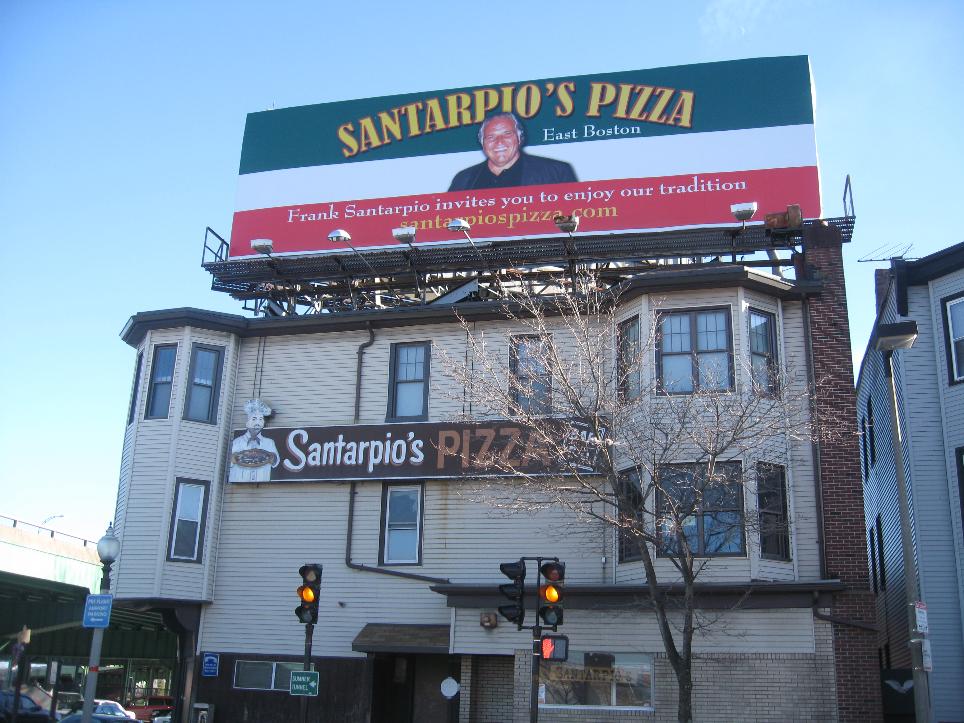
Santarpio’s Pizza
111 Chelsea Street
East Boston, MA 02128

*** CASH ONLY

Hours of operation:

Mon-Thu
11:30am – 11pm
Fri & Sat
11:30am – 11:30pm
Sun
Noon – 11:00pm

11219


Boston may not have a namesake pizza “style” like New York or Chicago, but if you’re looking for a pie that defines the local style on your next visit to Boston, check out Regina’s or Santarpio’s.

Regina’s and Santarpio’s specialize the same general type of pizza.  Both serve up thin crust pies perfectly charred in wood ovens – crispy on the outside and fantastically doughy on the inside. The tomato sauce is light, tangy and sweet.   Topped off with sharp, salty cheese.

Deciding which place you like more really comes down to the details.  I’m not going to try to pick a winner here because both places are awesome.  Instead, I’ll give you the information you need to decide which works best for your next trip to Boston.  Of course, you can’t go wrong with both.

Quick Tips

1. This is a review of the Regina’s in the North End – not the Regina’s branches.  There are a bunch of Regina’s branches scattered around town (South Station, Prudential mall, etc.) that don’t hold a candle to the original.  Skip the branches.

2. Don’t try to go to Regina’s during peak hours.  Regina’s is a tourist attraction in a touristy section of the city.   Don’t let that scare you away from Regina’s or the North End – you should check out the North End when you visit Boston – just understand that if you show up at Regina’s during meal times you will be standing in line out on the street for a while.

3. Both Regina’s and Santarpio’s have bars, so you can wash down your pizza with beer or wine.

4. Go to Santarpio’s if you’re looking for: a meal on your way in or out from Logan Airport (it’s just minutes away from the airport by car), the best sausage pizza in the city, a heartier slice, or local Boston flavor.

5. Go to Regina’s if you’re looking for: a meal in the North End, the best pepperoni pizza in the city, variety on the menu.

Santarpio’s

In overly simplified terms, Santarpio’s is the heavier, heartier pizza.  The crust is heartier, more charred.  Whereas Regina’s dusts their crust with a light flour, Santarpio’s trademark is a coarse cornmeal crunch.   Check out the legendary, delicious sausages cooking over open fire by the entrance.

Similarly, the Santarpio’s experience is a bit rougher around the edges.  Whereas Regina’s is packed with tourists, Santarpio’s is all local.  Expect: servers with thick Boston accents and some Boston attitude, local youth hockey teams eating after practice, the guy in the booth next to you talking about the “top 5 coldest Pats games” he’s ever sat through.

Expert Order: Sausage pizza, bring cash (‘Tarp’s is cash only)

Regina’s

Regina’s plain cheese slice is just about perfect – light, crispy, salty and sweet.  The menu also includes all the standard topings, as well as a variety of specialty pizzas.  I prefer to keep it simple – I think that lots of toppings can take away from a great slice – but Regina’s provides more variety than Santarpio’s if that’s what you’re into.

As mentioned above, Regina’s is a popular tourist destination.  Don’t expect anything fancy though.  Regina’s is still a no-frills pizza joint.

Expert Order: Pepperoni pizza (well done), white pizza (this pizza doesn’t include Regina’s awesome red sauce so make sure you get the pepperoni as well).

Perfect Alternative

If the line at Regina’s is too long, or if you’re just looking for a quick slice to carry out, Ernesto’s in the North End is a perfect alternative.  Choose from a wide variety of pies and keep in mind that Ernesto’s slices are HUGE.  For the full experience, carry out and eat in nearby Christopher Columbus Park with great views of Boston Harbor.

Driving to Eilat and the day trip to Petra

After our brief stay in Tel Aviv, we took our rental car and proceeded south towards the city of Eilat, which is pretty much the most southern city in Israel.  To get to Eilat you can take a quick flight if you’re pressed for time.  But if not, the drive through the Negev Desert is about 4.5 hours.

Heed this warning: Israeli drivers are aggressive and brazen.  I mean – really brazen. So much so that most credit card companies’ insurance WILL NOT cover any rental damages in Israel.  You’ll have to really do your research if you want to find a credit card that will insure rental cars in Israel.  We actually had to open up an American Airlines credit card in order to get rental insurance for our car (and it’s a good thing we did too because our car didn’t make it through the trip without suffering some damage – admittedly my fault).  And make sure to have a GPS!  The maps aren’t exactly easy to use for getting in and out of the urban areas (more to come about that in the Jerusalem segment).

The roads through the Negev are very mountainous and quite scenic.  On the route there are several sights to see such as Sde Boker, which is the sight where Ben Gurion’s desert home is located.  There are also several wineries to visit, however some of them are gated and you MUST have a cell phone to call them to open it up.

Once we arrived at Eilat, the first thing you’ll notice is it’s very modern.  The city is very commercial and much more of a beach town than anything else.  You won’t find much local cuisine as they’re catering to the tourists, so unless you’re there when it’s warm and you’re going to do some sunbathing – the city doesn’t need much more than a day to see.  However, though it wasn’t local, we did eat at a very good Italian seafood restaurant called Pago Pago that is worth trying out.  I had the shrimp & calamari butter oil gnocchi which was excellent.

So we weren’t in Eilat for the beach.  The true reason we stayed in Eilat wasn’t so much to see the city as much as it was our launch point to see the great ruins of Petra.

Petra is located just across the border in Jordan so it’s best to book a guided tour to help you get through customs.  This is not a cheap excursion however and it cost us around $300 per person as well as $60 for the customs entrance fee into Jordan.  IMPORTANT: Remember – if you ever want to visit a place like Lebanon or another Arab country that doesn’t recognize Israel as a state, you MUST get the Israeli customs to give you a separate, special visa to stamp so that they don’t stamp your passport.

The group we went with was EcoTour.  They were quite good, providing us with an excellent guide and delicious lunch/dinner (the place they took us had amazing hummus).  They also offer overnight Petra excursions for the serious trekkers, and in hindsight we wish we had booked the overnight tour as we quickly realized that Petra had much more to offer than we thought.

The drive to Petra is about 2 hours from Eilat.  The start of the Petra tour begins as you take the downhill (about 1/4 miles) walk towards the Siq (narrow passage).  Once you get to the Siq, it’s like entering a whole other world.  The stroll through this narrow canyon is surprisingly long, with several archaeological carvings and monuments along the way.   You have to mind your step every way because donkey pulled rickshaws come careening through the curves of the Siq.

As you walk through the Siq, you’ll eventually come to one of the most famous sights in history – most notably made recognizable by Indiana Jones and the Last Crusade: The Treasury 0r Al Khazneh.  It’s easy to see why this facade was used as the location where the Holy Grail was located, but unfortunately in real life all that’s inside is an empty chamber.  Sorry, no blades cutting off heads or leaps of faith to be had.  Still impressive nonetheless, the Treasury is best viewed in the morning when the light from the sun hits the facade perfectly.

Because Indiana Jones made the Treasury so famous, I didn’t believe that there was much more than that.  Wrong.  As we continued our tour, the Siq opened up and we came upon an impressive and expansive set of ruins that would rivals those in Pompeii and Ephesus.  Here you’ll see ruins of the entire city including ancient temples, buildings and columns all around.  I’m sad to say that because of the time constraints, we were limited in the amount of sightseeing we could do and sort of sped walked through the ruins without giving them their due attention.  This is why I said earlier that in hindsight we wish we had done the overnight excursion.

Even so, we got our money’s worth and as much as we would have liked to stay longer we saw the highlights.  Remember when I said we walked downhill at the beginning?  Well as we started walking back we quickly realized that we never really went uphill at any point.  So bear this in mind: the uphill walk all the way back will be a little challenging.  There are several locals offering horse, donkey and camel rides back to the starting point if you’re willing to spend a little cash for a lift (they’ll get in your face, but in general they’ll back off if you say no – unlike the guys in Egypt who will follow you and follow you).

I know the trip to Israel will already cost you a pretty penny, but if you’re already there and there’s any way you can get yourself to Petra, I would highly recommend doing so.

This slideshow requires JavaScript.

Las Vegas, NV

In general, I adhere to the saying “What happens in Vegas, Stays in Vegas” so I won’t go too much into the details of my time in Sin City – but I will give you all a general idea of the things we did and saw.  If you do Vegas right, you’ll only really need about three or four days before you get drained out.

Tip if you’re going to Vegas from L.A.: If you can afford to fly, then fly and don’t drive.  Google will tell you the drive takes around 3 hours.  With all the traffic, the drive ended up taking us like 7 hours from L.A.

Truly a city that never sleeps

They don’t call it America’s playground for nothing.  The city is an absolute shitshow, especially on the weekends.  People are spilling in and out of hotels (most with libations in hand), the streets are filled with Transformers, Victoria Secret Angels, Michael Jacksons, you name it, and the Las Vegas “slappers” are out in force trying to get you to take one of the porno pamphlets they slap in your face.

When we finally did get ourselves settled in (it was around 10 PM), the night was just starting.   The hotel we were staying at was Treasure Island.   Located relatively close to the middle of the strip (the prime hotel locations are places like the Bellagio and Cosmopolitan), TI has been completely renovated and the new rooms are surprisingly modern for what looks like an older hotel on the outside.   If you stay there, try and get a room facing the back or side or else the fire and explosions of the nightly “Sirens of TI” show go off right outside your window.  (Note: The show itself is pretty cheesy, so I wouldn’t go out of my way to see it.  But if you happen to be in the area, it’s free so you may as well check it out.)

While the rooms look like they got a little work done to them, the casino itself isn’t really anything to write home about.  The pool area is decent, and the expected club music and drunk flashing occurred, but as far as pool parties go – Treasure Island’s was pretty tame, but fun (tame for Las Vegas you must realize is a crazy, shitshow anywhere else.  The word shitshow is clearly being used a lot in this post).

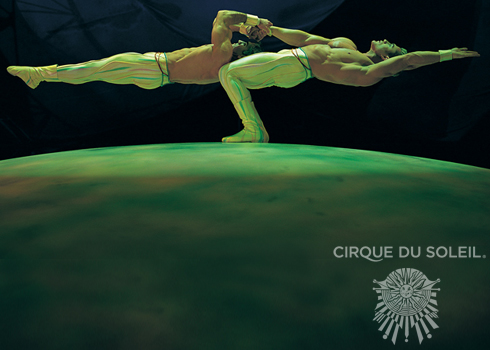
One thing you should definitely check out is a Cirque du Soleil show at some point and TI has one of the oldest running performances called Mystere.  If you’re unfamiliar with Cirque du Soleil, it’s one of the most impressive acrobatic shows around – you’ll see feats of strength, balance, and agility that you wouldn’t think are humanly possible.  The members of the cast really are some of the best performers and straight up athletes you’ll ever see on stage.  One part of Mystere that blew my mind was the performance of two bodybuidlers who (and I’ll try to explain this as best I can) slowly, lifted each other in crazy positions using only one arm or leg, or hamstring or whatever to form what could best be described as bizarre, homoerotic sculptures.

Aside from Treasure Island here are few other highlights:

STK
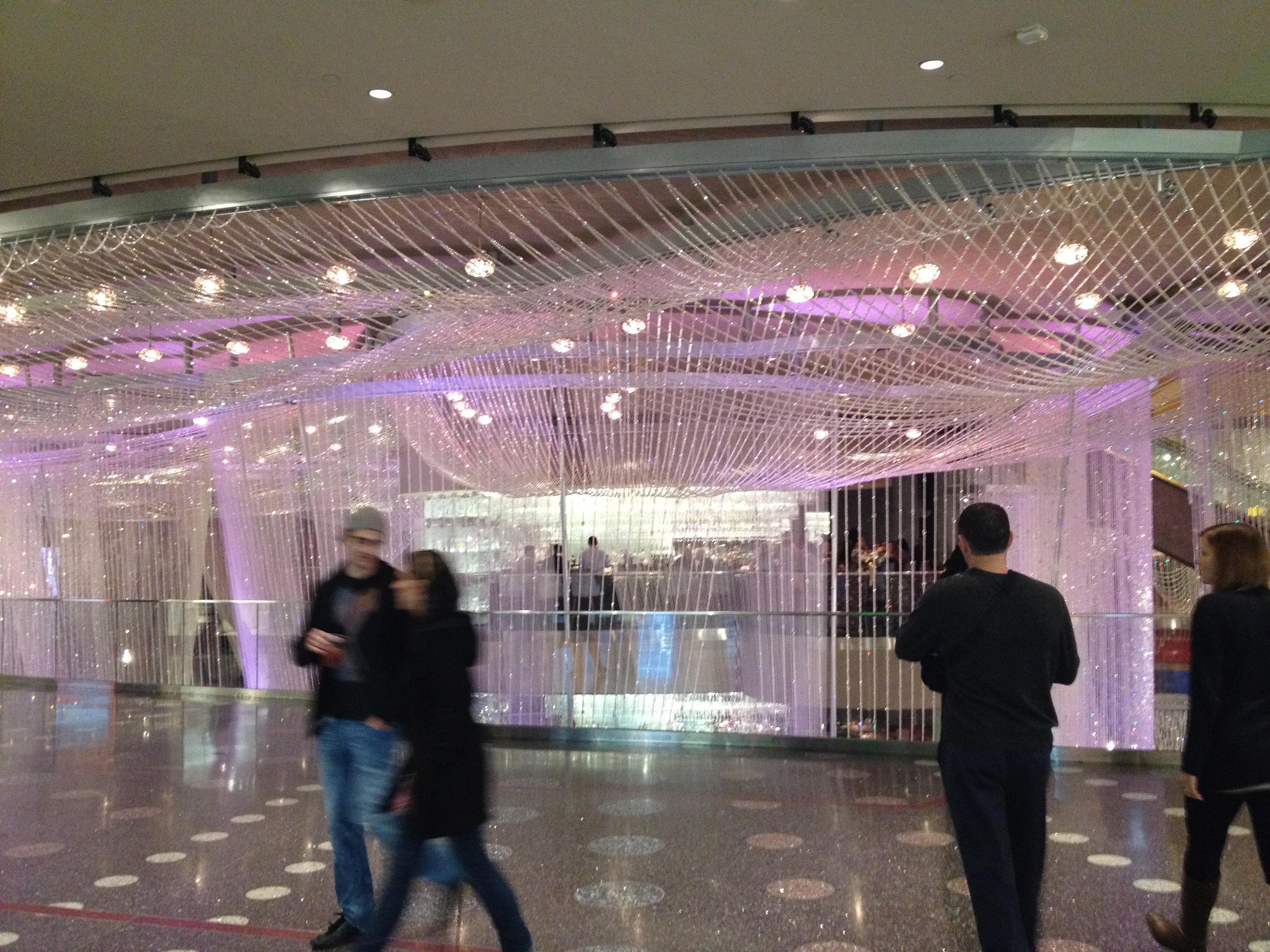
We decided to treat ourselves to a really nice dinner on one of the nights, and STK was the choice.  STK is the steak restaurant at the top floor of the atrium in Cosmopolitan.  Take your time walking up there and you can see the amazing chandelier bar that is 4 levels encased in a ginormous chandelier.  You’ll also pass the notoriously swanky club “Marquee” which is literally the hottest place to be in Vegas right now.  You’ll see no shortage of young ladies in dresses that are no bigger than my neck warmer flowing into the club and masses of dudes in their best collared shirts who have no chance of getting in unless they’re ready to drop like $2000 or are arm in arm with a cadre of hotties.

Chandelier bar at Cosmopolitan

Back to the restaurant – we made it to the top finally – and had a reservation for 11:00.  If it’s the weekend don’t plan on sitting at your reservation time.  When all was said and done, we finally got our table at 11:45 – let’s just say it was the nighttime version of brunch.  Although the restaurant is a “steak” restaurant, it didn’t have that quiet, fancy feel.  The music was so loud that even when we were sitting in our booth, our seats were vibrating from the bass.

The prices are expensive, so be ready to pay out a handful.  However, they weren’t any more expensive than a nice steak place in any other city.  Because I was already past my budget for the trip, I went with the 12 oz. skirt steak, which probably is their most affordable, but not as high quality cut choice.  I can only imagine what the $50-$60 steaks must be like because the skirt that I ordered was actually really damn good.  Extremely juicy, and came with its own steak sauce (You don’t need to pay for one of the extra ones on the menu, the standard dipping sauce is quite good) which gave the steak a very robust, meaty flavor.  The mac and cheese side was also well done, served in a tradition iron cast bowl with the perfect proportion of cheesy, creamy, bread crumby goodness.  Grade: B+ only because I don’t like not being able to hear any conversation and when my table is bouncing while I eat.

Dealertainers at Imperial Palace
Who doesn’t want to play blackjack with Michael Jackson, Elvis, or Lady Gaga as your dealer? Don’t get scared off by the construction as they remodel the hotel – the Dealertainers are worth checking out as they perform on stage and stay in character as you try to hit 21.

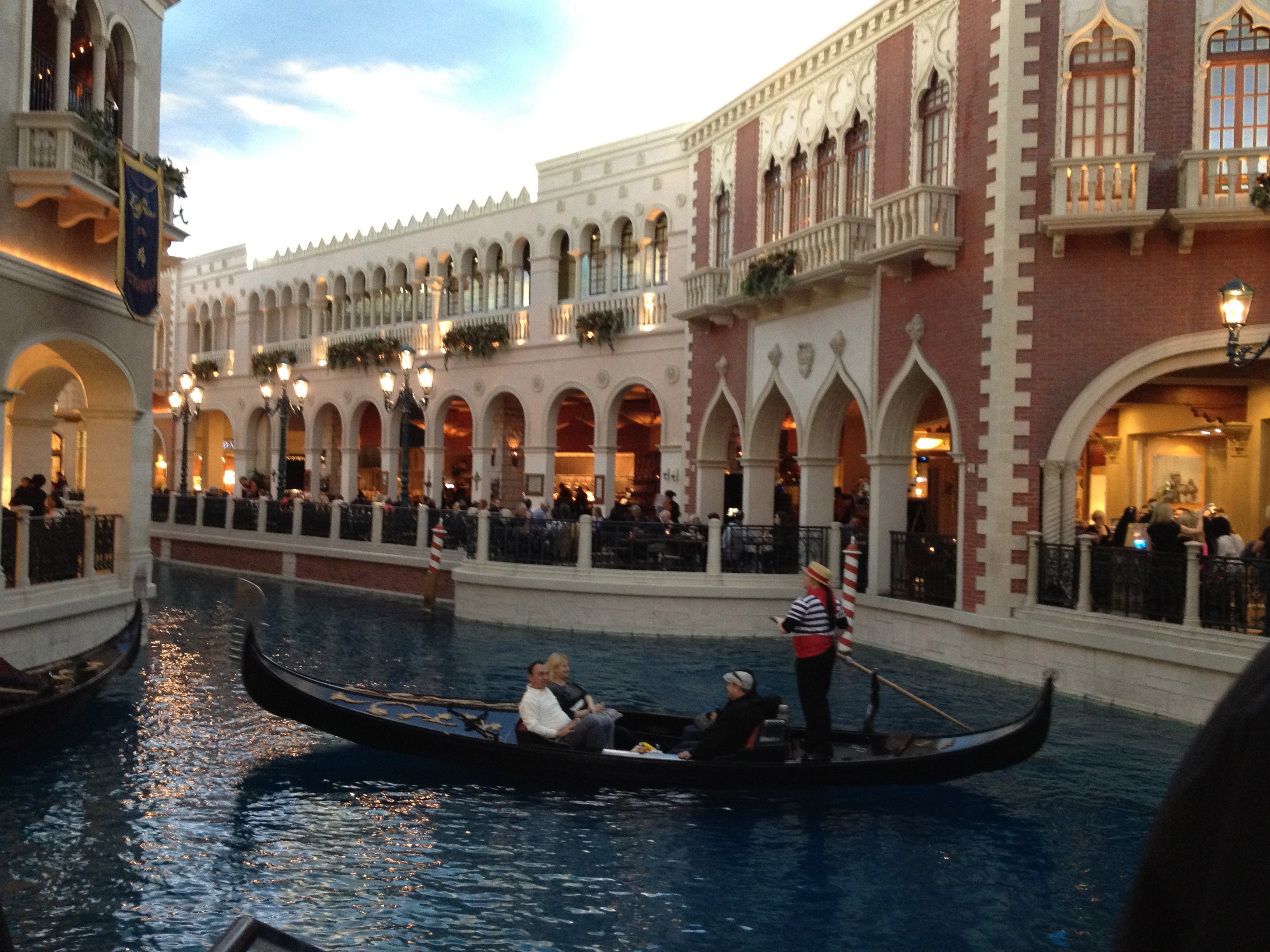
River through the Venetian
No need to travel thousands of miles to see the rivers through Venice.  Vegas provides their own version of it at the Venetian Hotel.  Like everything else in Vegas, it’s absolutely ridiculous in the best way.   Shops line the indoor river as gondolas flow back and forth through the hotel.

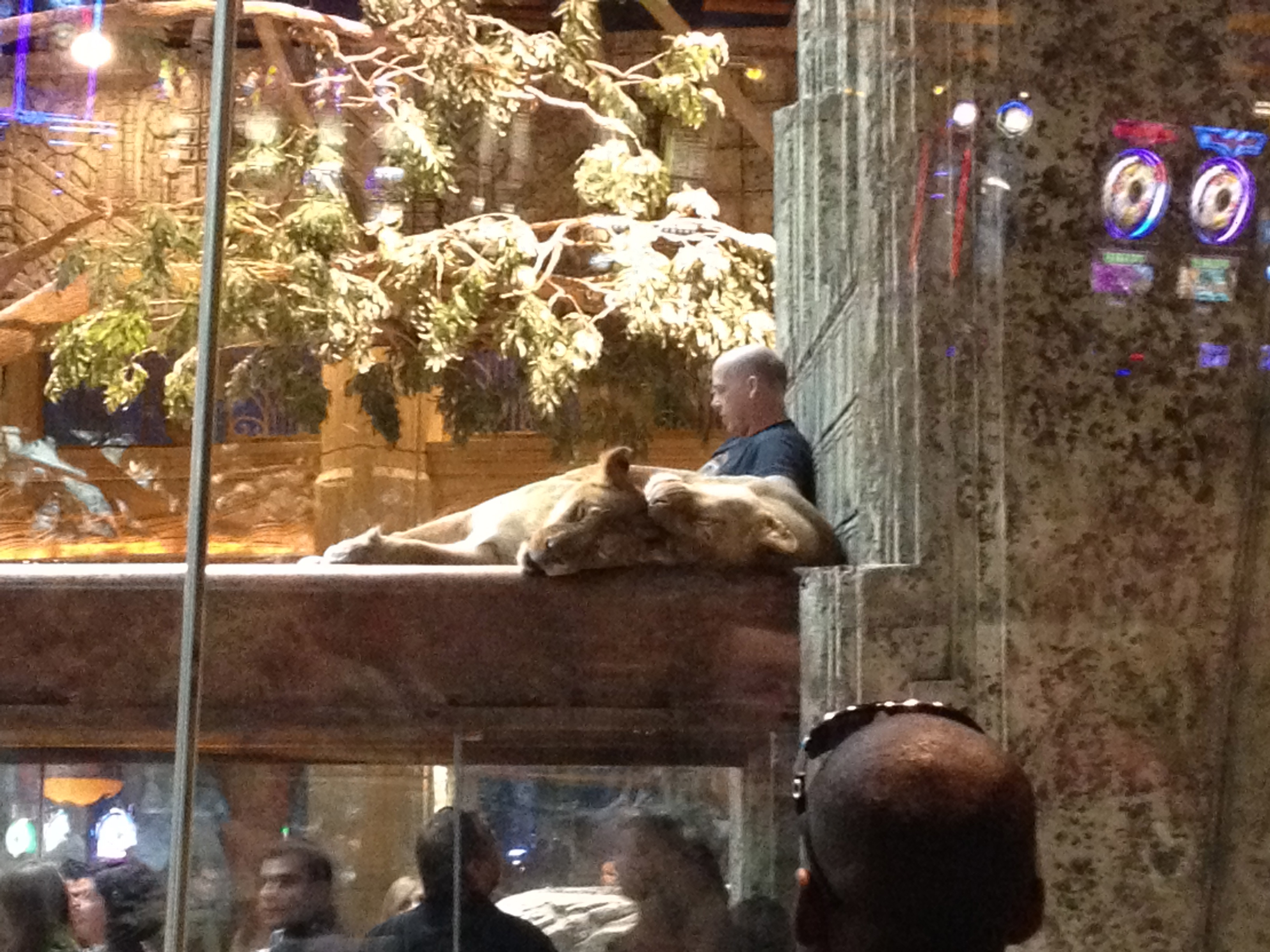
Lion Habitat at MGM
Make sure to walk through the MGM Hotel not only to see the indoor amusement park, but to walk through the Lion Habitat.  If you time it right, you’ll be able to see the lion caretakers in the habitat with the majestic animals and hear their talk.

Just chilling with some napping lions

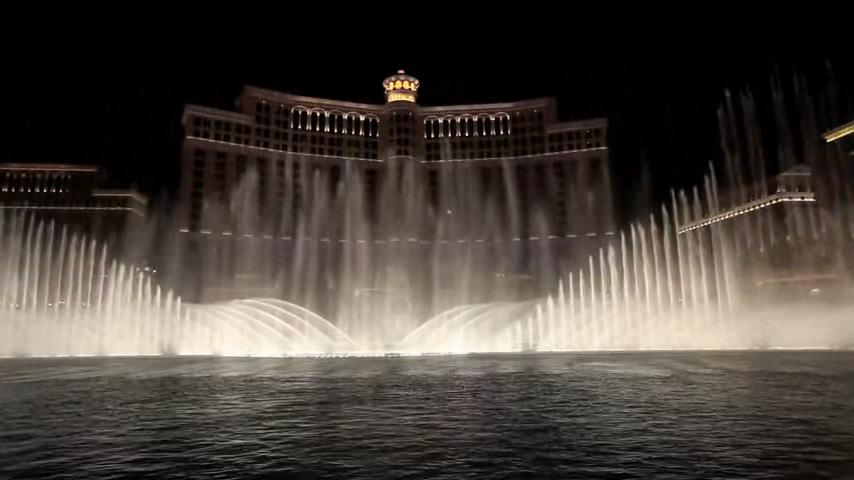
Fountains at Bellagio
Due in part to the ending of Ocean’s Eleven, the Fountains at the Bellagio have become an icon of Las Vegas.  Chances are you’ll walk by the hotel several times since it’s located at the middle of the strip and if you time it right, you’ll catch one of the fountain shows that run every 15 minutes.

There’s no way to get all the activities that one can do in Las Vegas into one blog post (and I obviously left the naughtier bits out).  When it comes down to it, there’s no shortage of things to see or places to have fun.  It’s like the entire world shrunk into one city – everything is big, bright and in excess.  You just have to experience the sensory overload for yourself.  Go play.

Quick Tip – Gold Bond

Hello friends!  As August quickly turns into September, I look back and can’t believe how much of a whirlwind the past month has been.  Stay tuned because I’ll be posting several posts on my trips around the U.S., but in the meantime I have a quick tip.  After all the flights and long drives around the country, I found out something that helps me make the trip a bit more comfortable.

Admittedly, I wasn’t sure if I really wanted to announce to the world that I do this, but after consulting with a couple of my buddies who didn’t know about this tip and said it was a good idea – I figured what the hell, we’re all mature adults.

I’ll keep it simple.  Gold Bond Powder.  For down there.  It really makes a huge difference if you’re going to be sitting on a long flight across the country or stuck in a car for 5+ hours.  So after you finish up the shower before your flight or long car ride, give yourself a nice helping of Gold Bond Powder down in your underwear and you’ll see for yourself the difference that I’m talking about.

Rafting/Tubing/Camping

Before I begin I need to say that this blog post is being done because I have no interest in going outside into the ridiculously hot, muggy weather we’ve got here in D.C.  This really is the nastiest I have ever felt it being outside in my life.

This weather is just a continuation of the heat wave that has hit the U.S. which started the day my friends and I went whitewater rafting/tubing and camping.  It’s a funny story about our experience that weekend.  We decided to go whitewater rafting in the morning and tubing in the afternoon with River & Trail Outfitters near Harpers Ferry on the Shenandoah/Potomac Rivers ($83 a person).  The ride from Washington, D.C. is about an hour. Little did we know that the oppressive heat during that day would be the cause of a ridiculously violent storm that night.  More on that later.

The River & Trail organization is top notch with knowledgable raft guides and they did a really nice job helping us plan the day.  For the whitewater rafting in the morning, they served us lunch on an island partway through the trip consisting of some remarkably good fried chicken, potato salad and watermelon (vegetarian options are available as well on request).  The rafting itself however was a little disappointing.  The water level was too low, so we ended up doing much more getting our raft off of rocks than actually paddling through rapids.  So here’s a tip: Try to find a weekend when the dams are opening.  The water level is higher and the rapids are continuous on the river throughout.   Also, in the event that you do like your raft guide, have a few dollars in your pocket (even if they get wet), because by the time we got on the bus back to the car and all that – getting money to your guide might slip your mind as it did our group (Sorry, Nate).

For the tubing in the afternoon, we drove our car down to the tubing launch point after the whitewater rafting trip was done.  Keep this in mind – by the time we got to the tubing, it was already around 3 so if you want to do both, know that the whitewater rafting will probably cut into the afternoon tubing time.  Most of the companies around Harpers Ferry that run tubing trips launch from the same point on the Shenandoah River, so be sure to compare prices first between River & Trail Outfitters, Adventure Center (formerly known as Butts Tubes, I guess they wanted to be taken more seriously), and River Riders to see where you can get the best deal.

The float down can take anywhere from an hour to two depending on how fast the current is and it is most definitely a relaxing time.  Don’t forget to put on your sunscreen even while you’re on the water!  Also, don’t worry about the rules saying no alcohol – you can bring whatever you want in coolers and most of those companies provide cooler tubes for $10 or so (River Riders have really nice yellow, large life raft looking tubes that fit a large coolers FYI).  Also, here’s another tip: don’t forget rope.  It’s more fun to float when you’re able to stay near your friends without needing to paddle constantly, and if you want to anchor yourselves to the middle of the river.

So after our little water baking/napping/drinking float we headed our way to Greenbrier State Park.  Greenbrier is about 30 minutes away from Harpers Ferry and for $25 a night you can book a tent spot, each with a picnic table and firepit/grill.  Note: the summer weekends and holidays will require you to book a least 2 nights.  The campground is really nice, with a beach and lake for swimming and some pretty decent hiking trails all around.  Also, there are several bathrooms/showers in the area that are remarkably very clean, as well as several drinking water fountains and convenient dumpsters located on the driveway out of the park.  The park also does host activities such as bingo, outdoor movies, and things of that nature on the summer weekends.

The one drawback is that some of the campsites are really close to each other, so when you choose your site to reserve online, try and find one that “looks” like its a little bit apart from the rest or else your tent could easily be a few yards away from your neighbor (who could be a loud 10 year-old kid or something).

So we get to the campsite and because we were on the water all day, we had no idea that a massive, historically bad thunderstorm was on its way to the area (apparently known as a “derecho” – http://www.washingtonpost.com/blogs/capital-weather-gang/post/derecho-behind-washington-dcs-destructive-thunderstorm-outbreak-june-29-2012/2012/06/30/gJQA22O7DW_blog.html).   The ranger told us we need to “batten down” as we were in the direct line of where the storm was heading.  Obviously we took this as, “Oh it’s gonna rain, that sucks”.  So we set up our tents, and started grilling our dinner (dum-dee-dum).  Tip: bring more coal than you think you’ll need.  Those fire pits don’t hold the heat in as well as a Weber grill so you need to keep pouring on the charcoal to keep the heat going.

Luckily for us, our grilling was just wrapping up when the rain came down – and boy did it come down.  We took shelter in one of the tents that, while water resistant, still was leaking all over us as we tried to play cards.  The thunder and lightning were pretty much continuous for most of the night.  I ended up sleeping in my car because the tent I was maybe planning on sleeping in with my buddy had flooded because the window in that tent was accidently left open (Tip: Don’t leave your tent window open in the middle of a thunderstorm…stupid).

In the end we survived the experience and despite the heat and rain, it certainly was better than being in the office.  I would recommend both River & Trail and Greenbrier if you ever do want to plan a trip such as ours in the Harpers Ferry region.  And here’s to good weather when you go.